
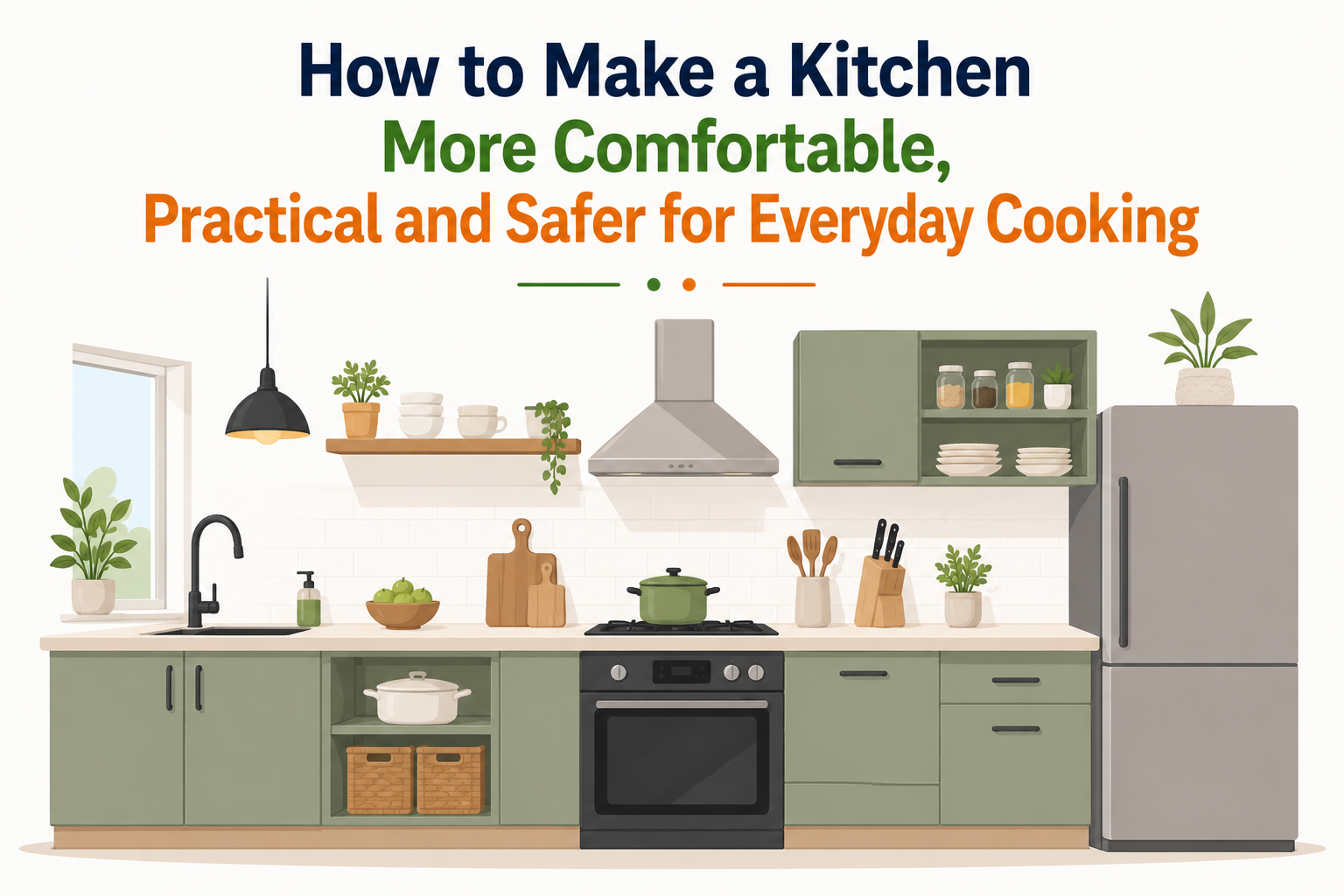
How to Make a Kitchen More Comfortable, Practical, and Safer for Everyday Cooking
People spend more time in their kitchens than they realise. This includes morning coffee, a little snacking, and dinner prep.
However, something’s off. Perhaps the counters are too cluttered. Or maybe their back aches after twenty minutes at the stove.
Fixing this up doesn’t require big renovations. A few small changes can make your kitchen more comfortable, practical, and safer. You don’t need to tackle everything at once. Pick a few, try them out, and build from there. So, let’s begin!
Before Buying, Rethink the Layout
First, you need to take a close look at your kitchen’s layout. Think about the paths you take.
You’re probably crossing the same path over and over. Fridge to counter, counter to stove, stove to sink. That’s the classic work triangle. Keeping these three things close minimises wasted steps.
Read: The Future of Smart Kitchens Trends Every Homeowner Should Know
Put Things Where Your Hands Actually Go
Here’s a simple test. Open a drawer close to your workstation. If you don’t use what’s inside daily, it’s probably in the wrong spot. Daily tools should be near your main work area.
This means that your spices and utensils should be close to the stove. Rearranging even one drawer can save real time.
Safety is Not an Afterthought
A gorgeous kitchen means little if someone gets hurt in it. Kitchen safety deserves as much attention as the colour scheme.
Cooking safely often comes down to simple habits. The Somerset Council has a useful reminder: “Watch that pan – watch the heat.”
Keep your attention on the hob, especially when cooking with oil or high heat. If you need to leave, turn the heat down or remove the pan.
Also, loose sleeves, dish towels, or paper towels near an open flame are not a good combination. For safety purposes, keep a small fire extinguisher somewhere close.
Also, turn pot handles inward while cooking. This two-second habit can prevent a lot of nasty burns.
Floors and Blades: Safety Matters
Wet floors near the sink are sneaky. Bare feet and spills are a real problem waiting to happen. Wiping up messes as they happen takes seconds and saves you a fall.
Knives deserve a proper home too. Loose blades tossed in a drawer are an injury risk.
Comfort Starts With Your Feet
Cooking is physical work. Ask anyone who’s stood at a stove for an hour straight.
Hard tile and hardwood look great, but they’re brutal on your joints over time. Your knees and lower back notice first.
This is where kitchen mats come in. A good cushioned mat near the sink or stove takes pressure off your legs and knees.
You will need one with a non-slip base. Comfort doesn’t help much if the mat itself becomes a hazard.
Light It Like You Mean It
Dim overhead lighting turns chopping into guesswork. You don’t want your fingers too close to a blade.
Under-cabinet lights fix this problem. They put bright, direct light exactly where you’re working. Smart lighting can take this idea even further.
You should mix your lighting sources when you can. A single overhead bulb rarely covers every angle you need.
Warmer bulbs feel cosier for everyday use. Save the cooler, brighter tones for detailed prep work.
Give Your Body a Break
Changing up simple things can help you more than you think. Counter height is one of these. If your counter sits too low, you’re hunching without even noticing.
University Hospital Southampton NHS Foundation Trust recommends working at the correct height and to “try to avoid stooping”.
Your work surface should feel comfortable rather than forcing you to bend or stretch. A raised cutting board can sometimes improve your setup without changing the whole counter.
Your kitchen should fit your body, not the other way around.
Break Up the Repetition
Chopping, stirring, and whisking are all repetitive motions. Your hands feel it even if you don’t clock the hours.
So, take short breaks during longer cooking sessions. A thirty-second stretch resets more than you’d expect.
Clear the Clutter, Reclaim the Counter
An overloaded countertop slows everyone down. Keep only your daily essentials out in the open. Everything else can live in a cabinet or drawer.
Moreover, try clearing the counters completely, just once. Notice how much bigger the space suddenly feels.
Storage That Actually Makes Sense
Drawer dividers sound minor, but they change everything. You stop digging through a pile of mismatched spoons.
Vertical space gets ignored in most kitchens. Wall-mounted racks can free up a lot of room.
Moreover, pull-out shelves rescue deep cabinets from becoming black holes. So, no more crawling on the floor for a lost lid.
Don’t Ignore the Air in the Room
Cooking creates a lot of smoke, grease, and steam. No proper airflow means that all of that lingers. A good range hood pulls heat and odours out fast. Your kitchen feels lighter, and your paint job lasts longer. Don’t forget to clean your range hood filter. A clogged filter barely does its job at all.
When frying or searing, crack open a window. Fresh air will help. Good airflow isn’t just about comfort, either. It also cuts down on grease buildup, which reduces fire risk.
Pick Surfaces That Can Take a Hit
Countertops absorb a lot of daily abuse. Knives slip, acidic sauces spill, or you might put down a hot pan. So, you need a countertop that can bear all this. Quartz and laminate hold up well against stains and scratches.
A wipeable backsplash saves you from scrubbing grease every week. Tile and glass panels clean up in seconds flat.
Sealed grout resists moisture better than you’d think. That small detail keeps bacteria from settling in.
Watch Out for Small Hands and Curious Paws
Kids and pets see the kitchen differently than you do. Cabinets are doors, and cords are toys.
Stove knob covers are cheap insurance if you have young children around. They stop burners from turning on by accident.
Store chemicals up high or behind a lock. Keep them nowhere near the pasta and cereal boxes. Soft corner guards help too, especially on sharp countertop edges. A stumble shouldn’t end in stitches.
Don’t Forget the Sink
The sink pulls more daily duty than almost anything else in the room. Washing, rinsing, prepping- it never really stops. Standing there for dish duty adds up the same way stove time does.
Keep soap and sponges close by, not tucked under three other things. Digging around mid-task breaks your rhythm fast.
A Few Small Fixes You Can Make Today
Not every upgrade needs a big budget or a weekend project. Some of the best ones take five minutes.
Add liners inside your drawers. Utensils stop rattling, and the mess stays contained.
Get cabinet handles that are easy to grip. Tiny ergonomic details matter.
Keep a step stool nearby for higher shelves. Standing on a chair is how a lot of accidents start.
Conclusion
Comfort isn’t really about looks. It’s about how the room actually feels to use every single day.
Start with layout and safety first. Those two areas have the biggest impact on your daily routine. Then layer in comfort, whether that’s better lighting, softer flooring, or kitchen mats under your feet. None of this needs to happen overnight. Pick one change, make it this week, and see how it feels. Small fixes add up faster than people expect. Before long, cooking starts to feel like less of a chore.